• PVD System Thin Film coating service

    THIN FILM COATING SERVICE

    From prototypes to series production, we deliver reliable
    PVD thin film coatings – supported by process
    expertise and documented quality control.


  • Home
  • Coating Service

Experts in coatings and substrate materials

Polyteknik is a specialised thin-film coating partner with more than 30 years of experience in PVD deposition.

We support your project from early development and proof-of-concept to pilot runs and repeatable series production. Always with robust quality control and clear documentation.

Let’s talk about how
we can help you

P: +45 9689 2800

Thin film coating service, we do the coating for you

Our in-house coating services give you access to advanced PVD capabilities without investing in equipment.
We help you select the right coating for your functional targets and substrate, then run a controlled, repeatable process.
From prototypes to high-volume production.

  • PVD thin film coatings (subcontract service)
  • Coatings for: EMI shielding, electrodes, optical mirrors / reflectors
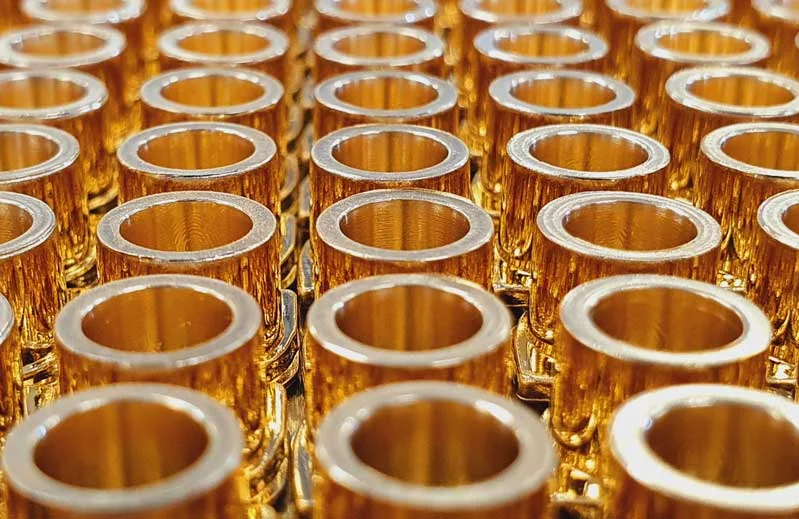
  • Internal tube coating and complex geometries
  • Prototype, pilot test, and series production workflows
  • Science and advanced research projects
  • Support: coating selection and process advice

OUR AREAS OF EXPERTISE

EMI Shielding

Electrodes

Reflector and mirror coatings

Internal tube coating

Deliveries to science facilities

We have worked closely with universities and educational institutions through more than three decades and have contributed to major scientific projects worldwide.

They range from recoating 8-meter telescope mirrors for the European Southern Observatory’s VLTs, to developing in-situ mirror cleaning solutions for the ITER fusion reactor and delivering highly uniform conductive metal coatings for beam-line kicker chambers.

Our coating workflow – from idea to series production

Every coating project is different. That is why we follow a structured, collaborative workflow that ensures the right coating solution, reliable performance, and repeatable quality.

  • Define requirements

    We start by understanding your application, substrate material, operating environment etc. Based on this, we recommend suitable coating materials and deposition processes.

  • Proof of concept

    We coat sample parts for initial testing and evaluation. Together with you, we verify functional performance such as electrical properties, optical behaviour, adhesion, and thickness to confirm the coating concept.

  • Pilot production

    A smaller batch is produced to validate repeatability, process stability, and quality control methods. Any necessary adjustments are implemented before scaling.

  • Series production

    Once approved, we move to controlled series production. We can support anything from small recurring batches to high-volume production, with documented quality control and consistent output.

Why PVD Technology is the Right Solution for Coating Products

Physical Vapor Deposition (PVD) is a sophisticated vacuum-based coating technique that enables the application of thin, durable, and highly precise films on a wide range of substrates. Compared to conventional coating methods like spray or paint, PVD offers superior control over film thickness, composition, and adhesion, making it an ideal choice for applications demanding high performance and precision.

How PVD Technology Works

In PVD (Physical Vapor Deposition), coating material is physically vaporized and deposited onto a target substrate under vacuum conditions. One of the most widely used techniques within PVD is sputtering, where energetic ions—typically from a plasma—bombard a solid target material, causing atoms to be ejected (or “sputtered”) from its surface. These ejected atoms travel through the vacuum chamber and condense onto the substrate, forming a uniform and adherent thin film. Two primary methods dominate PVD technology:

  • Sputtering: Energetic ions bombard a solid target material, ejecting atoms that deposit uniformly on the product’s surface. Provides excellent control over coating composition and thickness, even on complex geometries.
  • Thermal evaporation: The coating material is heated until it evaporates in vacuum and then condenses on the substrate. Faster and simpler.

Advantages of PVD Coating Methods

  • Precision and Uniformity: Allows extremely thin, uniform coatings with tight control over thickness and composition—hard to achieve with spray or paint.
  • Adhesion and Durability: Strong adhesion and superior wear resistance extend product lifespan.
  • Environmental Benefits: No solvents or VOCs (Volatile Organic Compounds) and PFAS-free, making it an eco-friendlier process and coating.
  • Cost-Effectiveness: Modern automation has reduced costs, making PVD competitive and cost-justified through longer product life.

Download a brochure of our PVD systems or contact us directly for a personal, dedicated and technical discussion around your needs!

Webbureau ITTP

Cookie Policy

What is a cookie?

A cookie is a small datafile that is saved on your computer, tablet or mobile phone. A cookie is not a program that can contain harmful programs or viruses.

How/why the homepage uses cookies

Cookies are necessary for the homepage to function. Cookies help us get an overview of your visit to the homepage so that we can continually optimise and adjust the homepage to your requirements and interests. For example, cookies remember what you might have added to a shopping cart, if you have previously visited the page, if you are logged in and what languages and currency you want displayed on the homepage. We also use cookies to target our ads to you on other homepages. On a very general level, cookies are used as part of our services in order to show content that is as relevant as possible to you.

How long are cookies saved?

How long cookies are saved on your device can vary. The time when they are scheduled to expire is calculated from the last date you visited the homepage. When cookies expire, they are automatically deleted. You can view a complete list of cookies below.

This is how you can reject or delete your cookies

You can always reject cookies on your computer, tablet or phone by changing your browser settings. Where these settings can be found depends on the type of browser you are using. If you do change the settings, please be aware that there will be some functions and services that you cannot use because they rely on the homepage being able to remember the choices you have made.

You can choose to not receive cookies from Google Analytics here.

Deleting cookies

You can delete cookies that you have previously accepted. If you are using a PC with a recent version of a browser, you can delete your cookies by using these shortcut keys: CTRL + SHIFT + Delete.

If the shortcut keys do not work and/or you are using an Apple computer, you must find out what browser you are using and then click on the relevant link:

Remember: If you are using several different browsers, you must delete the cookies in all of them.